
Pregnancy care, trimester by trimester
Nine months is a long time to feel uncertain. Here's exactly how we look after you and your baby — from the first positive test to the six-week postnatal check.
Your first antenatal visit
Just found out? Start here.
The first visit is longer than the rest — it sets the foundation for the whole pregnancy. Come any time after a positive home test.
What happens at visit one
- Confirmation and dating — a urine test and an early ultrasound to confirm the pregnancy and estimate your due date.
- Full history — your health, previous pregnancies, family history, medications and anything that needs adjusting.
- Baseline tests — blood group, haemoglobin, blood sugar, thyroid, and infection screening.
- Folic acid and supplements — started right away, with clear instructions on what and when.
- Your questions — food, travel, work, exercise, intimacy. Nothing is too small or too awkward to ask.
Bring with you
- Any previous medical reports or prescriptions
- The date of your last period, if you know it
- A list of medicines or supplements you take
- Your partner or a family member, if you'd like
Taking any regular medication?
Don't stop it on your own — some medicines must be continued, others switched. Bring them and we'll review each one.
The full plan
What happens, month by month
Every pregnancy is monitored on a schedule. Yours may vary slightly — this is the standard framework we personalise from.
Weeks 4–12 · First trimester
Confirm, date, protect
Visits every 4 weeks. The dating scan fixes your due date; the NT scan at 11–13 weeks screens for chromosomal conditions. Folic acid continues; nausea is managed if it's interfering with life.
- Dating scan & NT scan
- First-trimester blood screening
Weeks 13–26 · Second trimester
The detailed look
Visits every 4 weeks. The anomaly scan at 18–22 weeks examines the baby organ by organ. Blood sugar is tested for gestational diabetes between weeks 24–28. Most women feel the first kicks in this window.
- Anomaly (TIFFA) scan
- Glucose tolerance test · TT vaccination
Weeks 27–36 · Third trimester
Growth and readiness
Visits every 2–3 weeks. Growth scans track the baby's weight and the placenta; blood pressure and urine are checked each visit. We start talking honestly about delivery — your preferences, and what's medically wise.
- Growth scans & position check
- Birth plan discussion
Weeks 37–40 · Term
Weekly watch
Weekly visits now. The baby's position, your cervix and the fluid levels guide the final plan. You'll know exactly which hospital to go to, when to leave home, and what counts as an emergency.
- Weekly monitoring
- Clear "go to hospital when…" instructions
After birth · Postnatal
You still have a doctor
Recovery review, breastfeeding support, mood check (postpartum blues are common and treatable), contraception planning, and the baby's first vaccinations — the six-week check closes the loop.
- Six-week postnatal check
- Newborn vaccination schedule begins
You may need closer monitoring if you have
- Diabetes — pre-existing or gestational
- High blood pressure or pre-eclampsia history
- Thyroid disorders
- Twins or triplets
- A previous caesarean, miscarriage or preterm birth
- Age above 35, anaemia, or low-lying placenta
High-risk pregnancy
"High-risk" means watched more closely — not doomed
The label frightens people unnecessarily. What it actually means: more frequent visits, a few extra tests, and earlier decisions. Most high-risk pregnancies end with a healthy mother holding a healthy baby.
With 17 years of obstetric experience, Dr. Deepthi manages these pregnancies with a simple discipline: measure more often, act earlier, and keep you informed at every step so nothing comes as a surprise. Where hospital-level care becomes necessary — for delivery or complications — you're referred early and handed over properly, with your complete file.
- More frequent check-ups and growth scans
- Sugar and blood pressure tracked between visits
- Medication adjusted safely for pregnancy
- Delivery planned at the right hospital, in advance
Delivery & beyond
Normal delivery or caesarean — an honest conversation
Neither is a failure and neither is a shortcut. The right answer depends on your body, your baby and how labour unfolds — and you deserve the reasoning, not just the decision.
Normal vaginal delivery
Preferred wherever it's safe. Faster recovery, shorter hospital stay. We prepare you through the third trimester — position, pelvic floor, and what labour actually feels like stage by stage.
Caesarean section
Sometimes planned, sometimes decided in labour. When it's needed, you'll know why — the specific reason, not a vague "it's safer". A previous caesarean doesn't automatically mean another (ask about VBAC).
After the birth
Postnatal recovery, wound care, breastfeeding help, mood support and contraception — plus your baby's first check-ups and vaccines, all at the same familiar clinic.
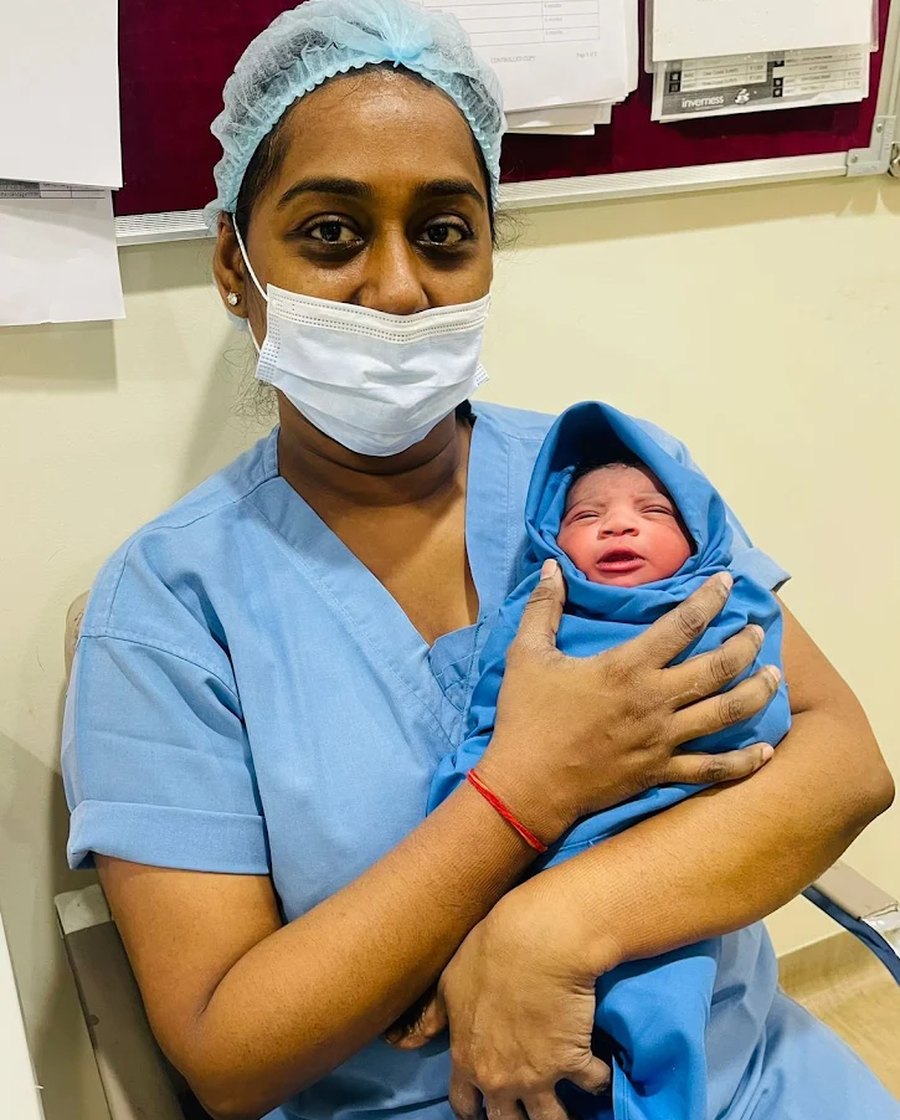
The moment it all becomes real
Every delivery we care for ends the same way — a baby checked, warmed, wrapped and placed in safe arms, and a mother who knows exactly what happens next.
Newborn checks, feeding support and the first round of vaccinations all continue here at the clinic, with the same doctor who saw you through the pregnancy.
Start your pregnancy care
Know the red flags
Call immediately — any time — if you notice
Bleeding
Any vaginal bleeding during pregnancy deserves a same-day call, even if it stops.
Reduced movements
If the baby is moving noticeably less than usual after 28 weeks, don't wait until morning.
Severe headache or swelling
Especially with blurred vision — this can signal blood pressure problems that need urgent review.
Fluid leaking or contractions before 37 weeks
Possible early labour — go to your delivery hospital and call us on the way.
Outside clinic hours?
For emergencies, go directly to your planned delivery hospital's casualty — don't wait for the clinic to open. Save their number alongside ours from your first visit.
Pregnant, or planning to be?
The earlier care starts, the smoother the nine months go. Book your first visit today.